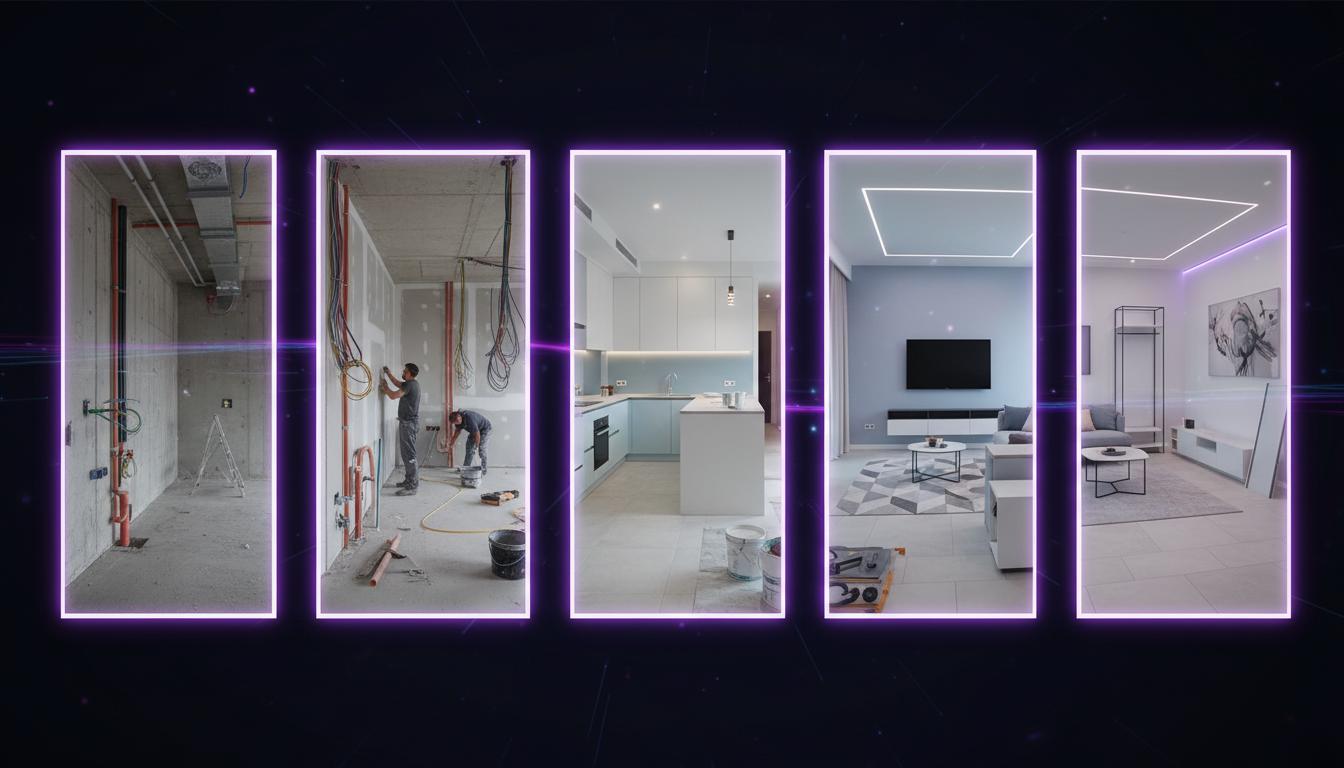
The Digital Apartment Passport: why a documented renovation raises the value of a flat


For years a renovation meant one thing: how the place looked. New tiles, new flooring, fresh paint. In 2026 that is no longer enough to genuinely raise the value of a property.
What increasingly matters is not only how a flat looks, but how well it is documented. The era of paper handover reports and a folder full of receipts is ending, and the era of a digital property history is beginning.
A property as a set of data
The European property market is digitising faster than anyone expected a few years ago. EU directives, ESG reporting and the push for energy efficiency mean that every modernisation should leave a digital trace behind it.
A new standard is emerging alongside it: digital building logbooks and property passports that gather data from the entire life cycle of a home. In practice this is a repository covering the technical parameters of materials, installation documentation, a history of modernisations, energy data, service interventions and the technologies used during the works.
A flat stops being a black box and becomes an asset you can say something concrete about.
Why documentation raises the price
The market prices in not only the standard of the finish but also the level of risk. A buyer usually asks the same questions: were the installations done properly, what is behind the plaster, which materials were used, are the damp-proof layers sound, and what does the flat really cost to run.
When there are no answers, uncertainty appears, and uncertainty always pushes the price down. Flats with full modernisation records and a high energy rating sell faster and require fewer concessions on price. Transparency builds trust, and trust translates into money.
What the Digital Apartment Passport is
At FOTON we treat a renovation as a process that produces not only a finished flat but also a complete set of data about it. Alongside the building work, a Digital Apartment Passport takes shape: a technical dossier for the property. The system builds it automatically, in the background.
The passport covers:
- •a photographic record of the works, meaning camera frames captured at regular intervals, each date- and time-stamped,
- •documentation of concealed works,
- •spatial scans and measurements,
- •environmental data from humidity and temperature sensors,
- •metadata on the materials, paints and building chemicals used.
Concealed works
The most expensive renovation mistakes are the ones you cannot see at handover: badly routed cables, leaking water installations, missing damp-proofing, acoustic and thermal bridges. Once the walls are closed, checking any of it becomes expensive or simply impossible.
Digital documentation removes that blindness. Every stage is documented and can be checked afterwards.
What it means for sale and valuation
A surveyor valuing a flat with full documentation has evidence of workmanship, material specifications, a history of modernisations and energy data to work with. That changes how the value is calculated: declarations give way to data, and guesswork gives way to evidence. For the buyer it means lower risk, for the owner a higher price.
Renovation as an investment in future liquidity
Over the next few years, digital transparency will matter more and more when selling, letting to institutional landlords, arranging bank finance, insuring a property and reporting on ESG. A lack of documentation can reduce the market appeal of a flat even if it looks excellent.
What you get
The outcome of a renovation is not only a well-finished flat. You are left with a digital property passport, a full history of the modernisation, installation documentation, evidence of workmanship and a concrete argument in negotiations when you sell.
The future of property value
A professional renovation has always raised the value of a flat. Today, though, a growing share of that value comes from what has been documented, not only from what you can see in the handover photos.
Planning a renovation?
Check the costs in our calculator — fast and with no obligation.